

Can Ohio Build Drones?
Will Ohio Build Drones?

Disclaimer: Newsletter and the information contained herein is not intended to be a source of advice or credit analysis with respect to the material presented, and the information and/or documents contained in this website do not constitute investment advice. Opinions contained within this letter are my own and not those of my employer.
"If I were giving a young man advice as to how he might succeed in life, I would say to him, pick out a good father and mother, and begin life in Ohio." - Wilbur Wright, 1910
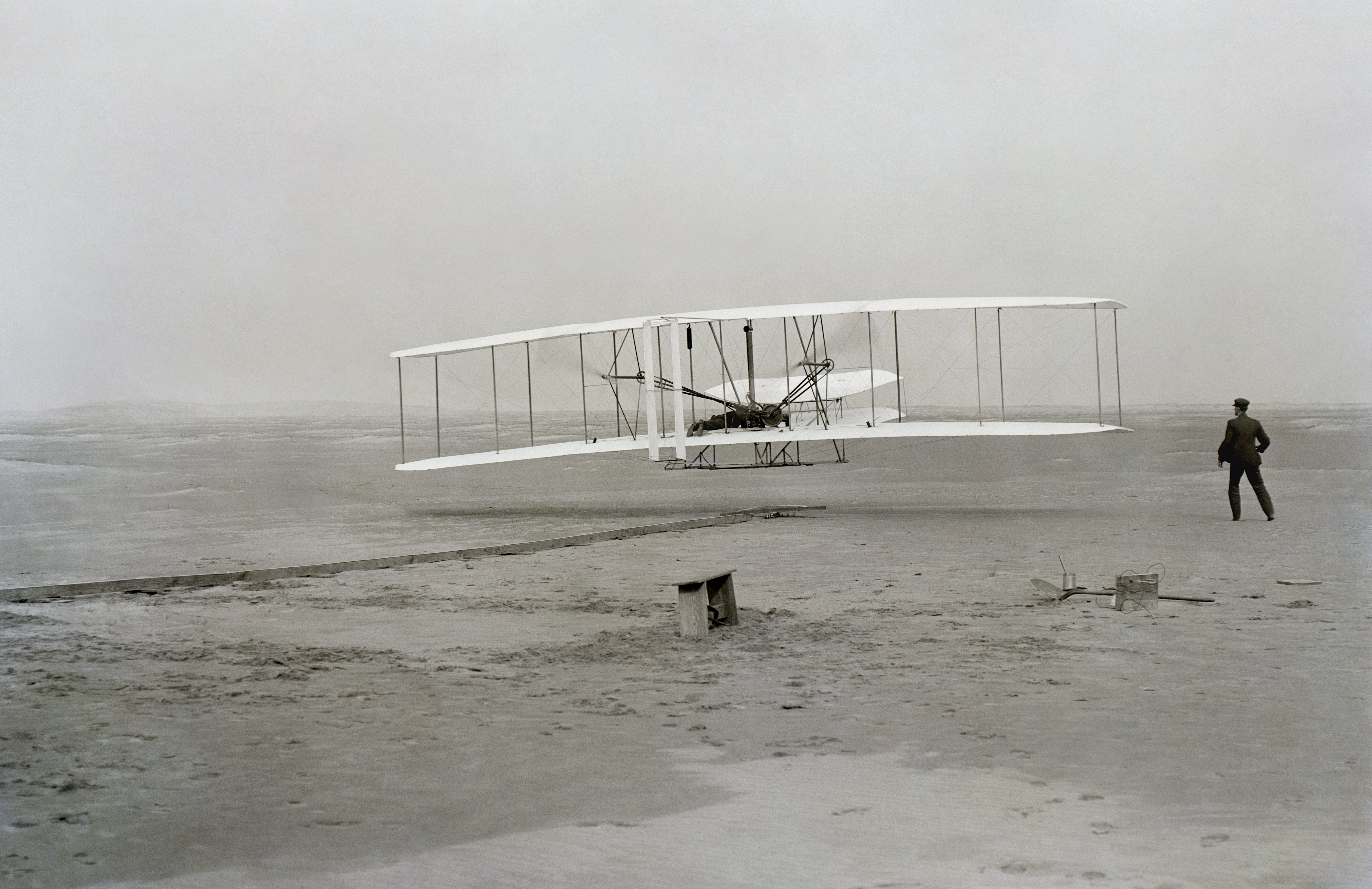
Ohio unequivocally invented flying. The Wright Brothers, were absolute geniuses, there’s no doubting that. And what they were able to accomplish, by way of very little formal education, a strong correspondence game (OG substackers), and looking at how birds fly, is remarkable.
Ohio has continued to carry on that legacy. While we are no longer the epicenter of building airplanes, we still have a massive presence in the aerospace industry. Likely the most notable company in the region is GE Aviation, which still has a stranglehold on the jet engine business. GE currently has its engines (directly and through JVs) in roughly three out of every four commercial flights in the world. Overall, the aerospace and aviation industry in Ohio supports roughly 100,000+ jobs, when measured across manufacturing, engineering, defense, maintenance, suppliers and research institutions.
The non-commercial centerpiece of what continues to make Ohio a healthy environment for the aerospace and defense industry is Wright-Patterson Air Force Base just outside of Dayton. It is one the most important air bases on the planet, let alone in our country. It is headquarters of the Air Force Material Command, which manages research, development, acquisition, testing, logistics, and sustainment for Air Force weapons systems. It also houses a significant chunk of the AFRL (Air Force Research Lab) - AF’s primary science and technology organization with more than 10K personnel. There are also the Air Force Life Cycle Management Center, which manages many of the AF’s largest acquisition programs. The United States Military, specifically the Air Force, spends a ton of money on air craft and other weapons systems. The Air Force’s total budget is ~$250 billion annually (including the Space Force). And, what’s more, most of those decisions flow through Wright-Patt.
Wright-Patt also hosts the National Air and Space Intelligence Center, which analyzes foreign aerospace and missile threats. They spend a lot of resources paying attention to emerging threats and how adversaries are updating their weapons, machines, and war tactics. It should be an epicenter for paying attention to trends in air-based warfare.
Are Drones Worth Building?
But the aerospace industry has not exactly been a growth engine for a while. And drones have been one of the next big things for a while. So who cares. If Ohio built them, would anybody buy them?
But I think something has shifted in the drone market in the last four years. The way that wars are fought are now a heck of lot different than they were several decades ago, largely due, in part, to drones. Cheap sensors, cheap communication and precision strike capability (all encouraged by the current state of drones), have transformed the battlefield. This has been heavily illustrated by conflicts in Ukraine and Iran and even civil conflicts like what’s going on in Colombia. Sure, there have been a lot of theory about how drones will change combat for several decades, but we now have pretty prominent exhibits of this happening in real time. And I am not just talking about military era drones from the last decade, but smaller, cheaper drones, like quadcopters, etc.
The government is paying attention, investing more into startup defense spending than in previous decades (not getting anywhere close to WWII and Cold-War era spending, but still on a big upswing). And when I say the government, what I really care about is that Dayton, Ohio is paying attention.
The US is buying more drones.
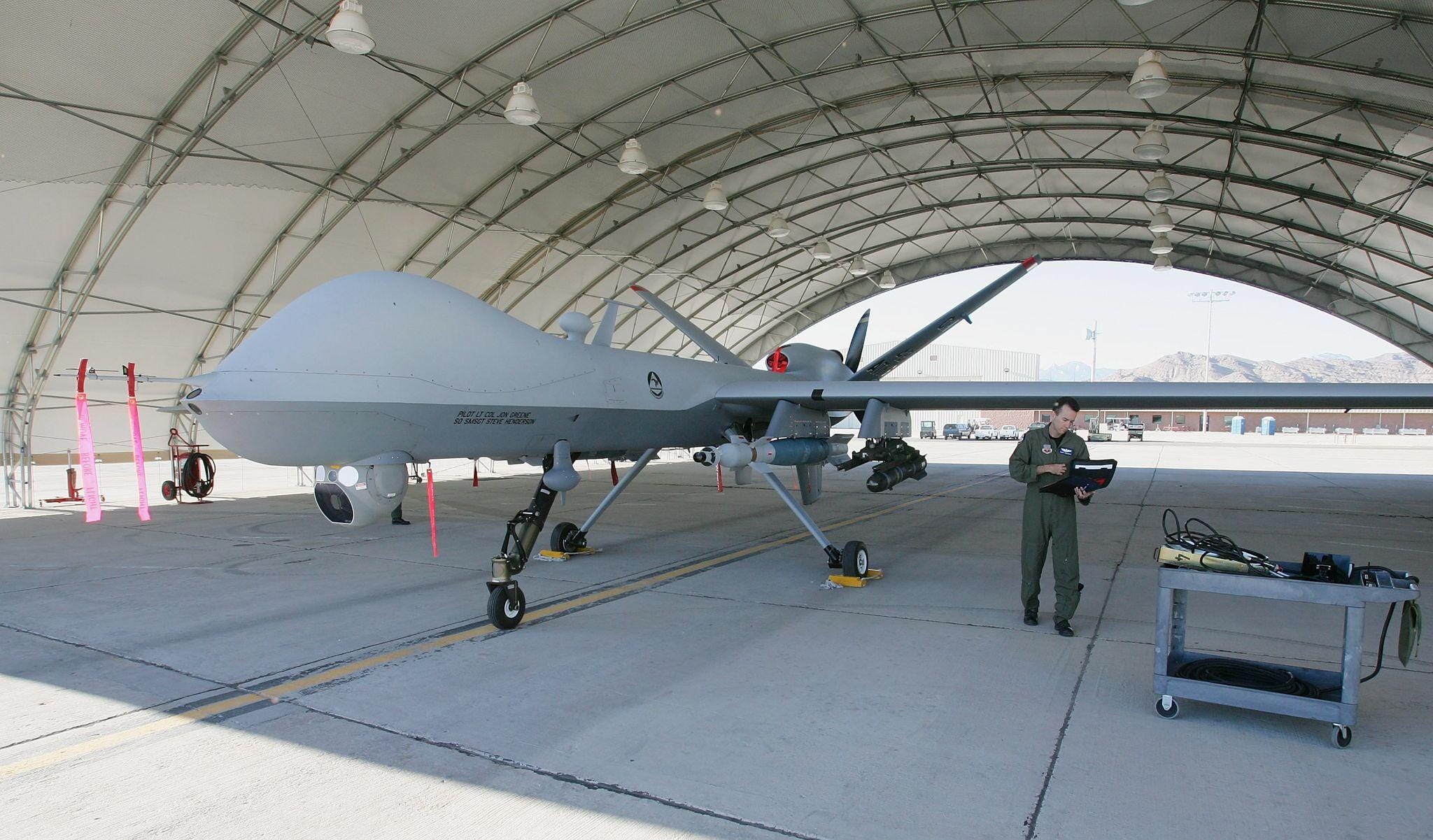
In 2015, the military was purchasing ~hundreds of drones annually, heavily concentrated on big, expensive, exquisite systems ($30M for the Reaper, $5M for the Predator, and hundreds of thousands for some of the surveillance and reconnaissance drones). Flash forward to 2025, and the US Army alone purchased roughly 50,000 drones, with a plan to reach 1 million drones over the next 2-3 years.
That’s a massive step up, even if they don’t hit that goal, it shows how much sentiment has shifted. This started in 2023 with the Replicator initiative, focused on rapidly acquiring thousands of “autonomous platforms”. The Trump admin has also rolled back other initiatives that limited drone production and access. Part of this means that the military is in the process of approving hundreds of American products for military procurement.
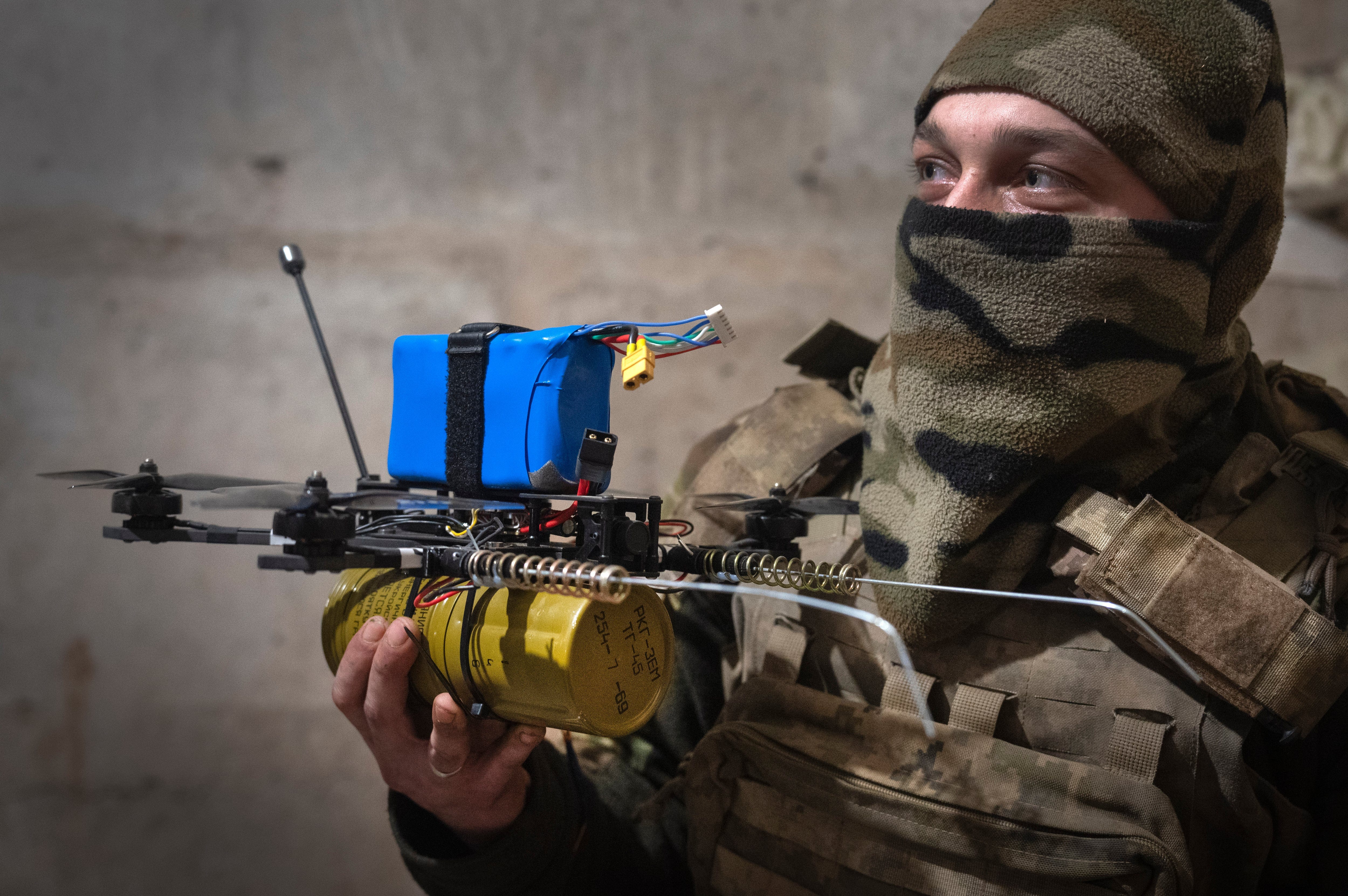
A big reason for this shift is the FPV attack drones being deployed all over Ukraine. These are similar to racing drones and can cost from $500 - $5,000, considerably cheaper than what the US Military is currently purchasing. They generally carry explosives, are piloted by an operator and have “one-way missions”. They can also do some serious damage both physically and financially, taking out tanks that cost $15M. As morbid as it sounds, the ROI on a drone like that is unbelievable. There are close to millions of these drones being produced on each side of the war in Ukraine today.
That explains the military’s interest in drones. In the real world environment, the literally battle-tested solution was smaller, more readily produce-able drones. The focus has shifted toward volume, not necessarily on firepower. Thousands of workable drones are better than dozens of exquisite systems. And our current ecosystem is built around exquisite systems.
But Why Ohio?
Sure, conflict has changed, and cheaper, higher volume drones are incredible vital to national defense. But what does that have to do with Ohio?
Enter: Anduril.
Now, I won’t wax poetic about why Anduril is a great company. I have no investment in it and I don’t plan on being exposed there any time soon. If you are really interested, I recommend The Anduril Thesis from the folks at Contrary Capital. I read it recently and it’s an excellent breakdown of why it’s such a fascinating company.
But one of the key takeaways is that Anduril has been betting on this core concept for a while: military success requires exquisite systems AS WELL AS mass-produceable products. The question is not whether the weapon is powerful, but whether the nation can produce it at massive, economically positive, scale.
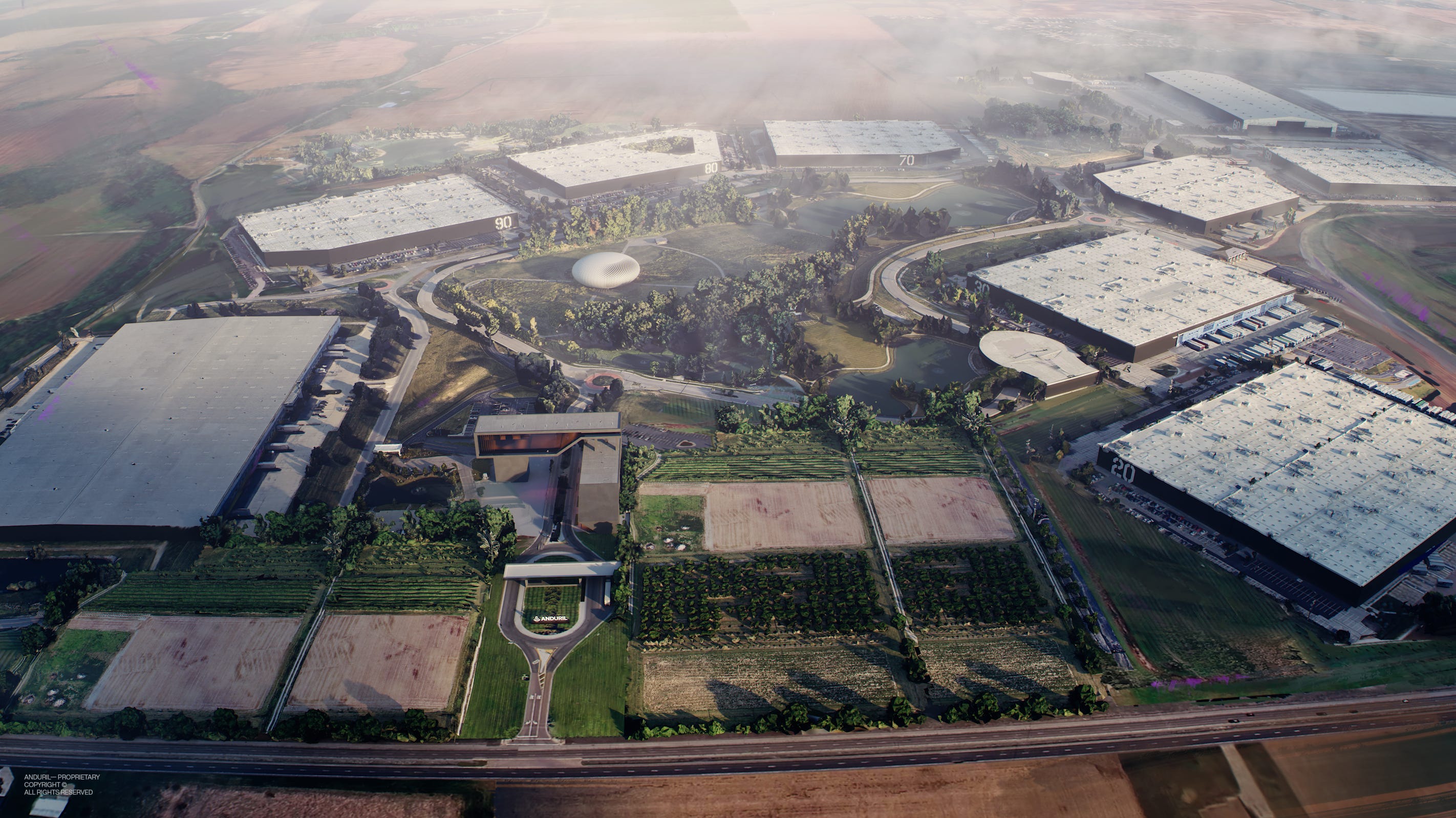
One of the ways Anduril is focused on fulfilling that goal is building a 5 million square foot facility in central Ohio, called Arsenal-1. This will cost them roughly $900 million and generate ~4,000 new jobs in the region. And notably, they will have more than just machinists and plant workers on site as well. Anduril has a company policy where they do not open up a facility like this without a leadership team member agreeing to moving to that facility full time. AND, they have a practice of taking talent they hire locally and bringing it out to their HQ for training and emersion - the “Anduril Way”.
I normally don’t get excited about companies from outside of the region building manufacturing facilities like this one in the region. The talent they bring on is not always the talent that turns around and starts companies. But, I am intrigued by what Anduril could mean for the Midwest. First, Anduril ran a competitive process and could have placed this site pretty much anywhere, but selected Ohio because it had all of the resources they needed to succeed. In some ways, Anduril is still fighting for its seat at the table and cannot afford to screw up a project like this. They have done their homework and made this decision for economic reasons. Second, I still think we are in the early innings of the kinds of products that Anduril can build, which means that innovative thinking is necessary across all of its facilities. It’s not like they produce one product and that’s all they do. Their whole business model is predicated on the idea that they will produce speculatively and try to find a buyer. This kind of thinking and attitude is a positive one for Ohio’s century-old aerospace industry.
But again, they picked Ohio for a reason. As previously mentioned, we have great aerospace history. We already have 100,000+ aerospace and aviation workers in the region and a lot of technical know-how. Having companies like GE Aviation, Parker Hannifin (Cleveland), TransDigm (Cleveland), Astronics, Textron, etc. help to validate that you can build aviation products in Ohio. Anduril is going to help level up this talent base.
On top of that, the region has excellent aerospace education and research institutions. Ohio produces a disproportionate share of the kinds of engineers needed for aerospace, defense, robotics and manufacturing. Ohio State is one of the largest engineering schools in America. The University of Cincinnati also has a massive engineering school and the co-op program helps bolster the experiences of the engineers, so they actually know how to build things. Case Western is incredible. Wright State and Dayton are excellent as well.
To dig deeper: OSU is a top 25ish engineering school AND it produces a ton of talent. Both things matter for manufacturing drones. You need high quality and quantity. UC is a top 70 school and does the same thing as OSU + it has the co-op program. Case Western is a top 40 engineering school.
Then you also have the non-academic settings that matter as well. GE Aerospace employs ~18K - 20K people in Ohio, most of them in Cincinnati. Of those, probably 3K - 6K are engineers. They also have a lot of pure manufacturing talent as well, with somewhere between 1K and 2K machinists and toolmakers, and 2K - 4K skilled production technicians. But that’s just current day. There are also alumni of GE floating around at other companies in the region (or that want to come back, because everyone wants to come back) that could be good targets for this talent as well.
Parker Hannifin, while smaller, has a similar proportional talent base. They have ~7,000 employees in Ohio. The actual manufacturing talent, split between engineers and skilled manufacturing workers is likely ~4,500.
If you are going to build drones, you need really good talent. And if you are going to start drone companies, you need really good drone talent.
What is the Current State?
Now if you asked the question: how many drones does Ohio make today - the answer is negligible. We have some players, like Event 38, Dexa Logistics, and… not a lot others. Maybe the state has produced 1,000 drones, ever? Even if that number is 5,000 or 15,000, which it isn’t, that would pale in comparison to what the military demand is going to be moving forward.
There really isn’t a big regional player today that has a stranglehold on the industry. The consumer drone market is in China, and the US Military will not buy their drones from there, lol. The existing status of the drone manufacturing market is effectively zero compared to what it could be.
But Ohio has all of the right resources: talent, know-how, and industry buyers (Wright-Patt). The defense industry has shifted to being much more pro-drone. One of the biggest, most innovative companies in the sector is about to hire a ton of people in Ohio. Wright-Patt isn’t going anywhere.
Ohio has the opportunity to take the drone market by the horns (wings?) and become a real player. What we have missed to-date is real demand, but that’s shifting. And once Anduril’s Arsenal-1 is fully built out, the talent will be second-to-none. I expect a lot of interesting startups to spin out of that facility in the coming decades.
Midwest Deals this Week
This is a section on some of the most interesting deals (not just venture) done in the Midwest in the last week.
Ensemble Health Partners
Location: Cincinnati, Ohio
Deal Date: June 13, 2026
Deal Type: Secondary Buyout / LBO
Deal Size: $12.0 billion (rumored)
Status: Rumor / Speculation
Ensemble Health Partners, a provider of healthcare revenue cycle management services, is reportedly in discussions regarding a potential $12 billion leveraged buyout involving its current sponsor, Apollo Global Management, and Thoreau Group.
The company helps health systems improve reimbursement and billing operations through revenue cycle management, coding, collections, denial recovery, analytics, and AI-enabled workflow tools.
Crowe
Location: Chicago, Illinois
Deal Date: June 11, 2026
Deal Type: Buyout / LBO
Deal Size: $3.0 billion
Status: Announced
Crowe entered into a definitive agreement to be acquired by Kohlberg Kravis Roberts (KKR) in an estimated $3 billion leveraged buyout.
Crowe is one of the largest accounting and consulting firms in the United States, providing audit, tax, risk management, valuation, restructuring, and advisory services.
Eaton Mobility Business
Location: Southfield, Michigan
Deal Date: June 11, 2026
Deal Type: Secondary Transaction
Deal Size: $2.54 billion
Implied Valuation: Approximately $5.1 billion
Status: Announced
Dana agreed to acquire a 49.9% stake in Eaton’s Mobility Business for approximately $2.54 billion.
The business manufactures powertrain, drivetrain, emissions-control, engine valve, transmission, clutch, and vehicle electrification products for automotive and off-highway OEMs.
Erebor Bank
Location: Columbus, Ohio
Deal Date: June 11, 2026
Deal Type: Early-Stage Venture Capital
Amount Raised: $276.0 million
Status: Completed
Erebor Bank raised $276.04 million from undisclosed investors.
The company is building a crypto-friendly banking platform targeting businesses in the innovation economy, including cryptocurrency, artificial intelligence, defense technology, and advanced manufacturing companies.
Capra Bank
Location: Dubuque, Iowa
Deal Date: June 11, 2026
Deal Type: Early-Stage Venture Capital
Amount Raised: $50 million
Structure: Includes $30 million of convertible debt
Status: Completed
Capra Bank raised $50 million from undisclosed investors.
The company operates a technology-enabled regional commercial banking platform serving communities in Iowa, Texas, and New Mexico through commercial lending, treasury management, private banking, and deposit services.
CareSeed
Location: Kansas City, Missouri
Deal Date: June 11, 2026
Deal Type: Acquisition
Purchase Price: Approximately $30 million
Potential Earnout: Up to $12.5 million additional consideration
Acquirer: Sagility
Status: Completed
CareSeed was acquired by healthcare services company Sagility for approximately $30 million.
CareSeed develops healthcare quality reporting and medical record review software used by health plans and healthcare organizations to manage quality measurement, chart review, compliance, and reporting workflows.
Remedy
Location: Grandville, Michigan
Deal Date: June 11, 2026
Deal Type: Series A
Amount Raised: $20 million
Lead Investor: L Catterton
Additional Investors: Sonoma Brands Capital, Norwest
Status: Completed
Remedy raised a $20 million Series A financing led by L Catterton.
The company develops evidence-based skincare products focused on treating discoloration, uneven skin tone, and related skin-health concerns. The company plans to use the capital for clinical research, product development, and organizational growth.
Nox Metals
Location: Detroit, Michigan
Deal Date: June 14, 2026
Deal Type: Seed Round
Amount Raised: $11.5 million
Lead Investor: Hyperion Capital NY
Other Investors: Y Combinator, Palmer Luckey, Jared Friedman, Alumni Ventures, DTX Ventures, Operator Collective, RoboStrategy
Status: Completed
Nox Metals raised $11.5 million in seed funding.
The company operates an AI-enabled raw metals procurement platform that automates quoting, inventory management, cut-path optimization, order tracking, and shipping for industrial manufacturers.
Contact CI
Location: Cincinnati, Ohio
Deal Date: June 11, 2026
Deal Type: Later-Stage Venture Capital
Amount Raised: $8.5 million
Lead Investor: ALM Ventures
Status: Completed
Contact CI raised $8.5 million in venture funding.
The company develops haptic interface technology that provides force feedback and tactile sensation for virtual reality and augmented reality applications. Its products are targeted at gaming, healthcare, automotive, and simulation training markets.